

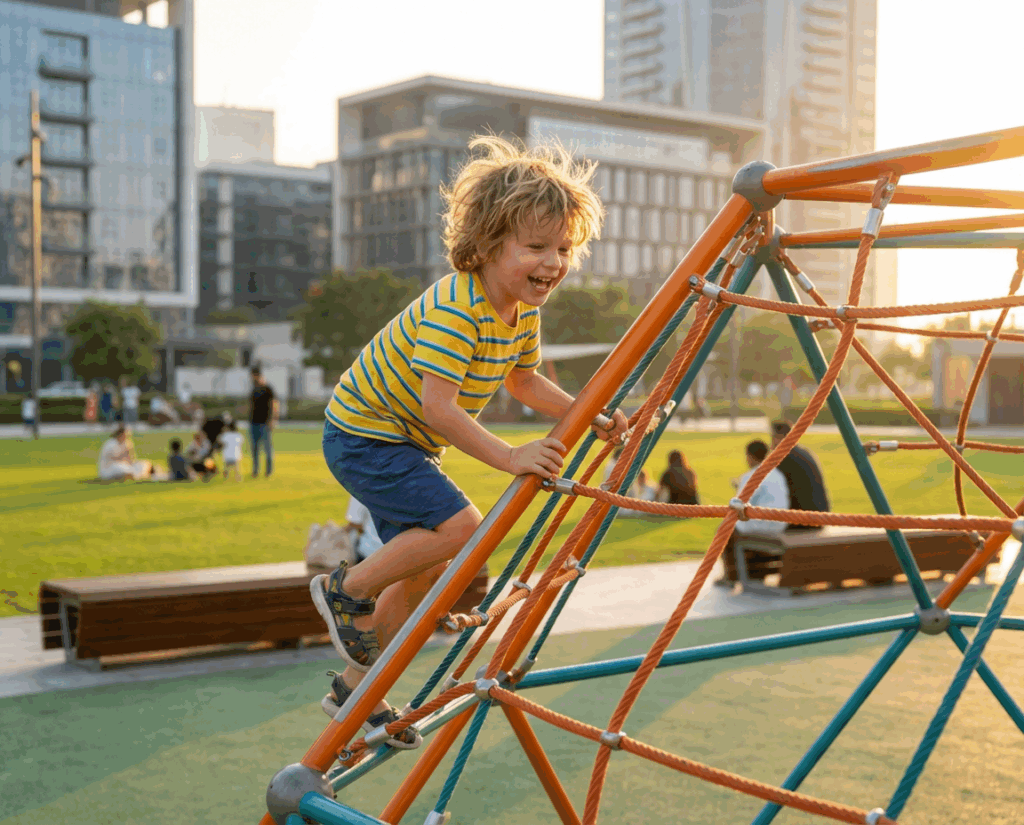
Psychomotor development refers to the close connection between a child’s physical movement, thinking, emotions, and social interaction. Children do not learn through thought alone – they learn through movement, play, exploration, and real-world interaction. Every time a child climbs, builds, runs, or plays pretend, the brain strengthens networks that support learning and behavior.
Psychomotor therapy focuses on developing these connections through structured, movement-based activities. It is worth noting that excessive passive screen exposure – watching or scrolling with minimal interaction – is most strongly linked to delays in psychomotor development.
Higher screen time is associated with reduced physical activity and delayed motor milestones. Children may show poor balance and coordination, reduced endurance, and less confidence in movement activities like running, jumping, or climbing.
While screens involve finger movements, they do not replace real fine motor experiences like drawing, cutting, building with blocks, or manipulating objects. Excessive screen use may contribute to weak hand strength, poor pencil grip, and difficulty with handwriting readiness.
Through movement, children learn where their body is in space, how much force to use, and how to coordinate their movements. High screen exposure limits these sensory experiences, which can lead to clumsiness, poor posture, and reduced confidence in physical play.
Fast-paced digital content trains the brain to expect constant novelty. This can lead to shorter attention spans, difficulty completing tasks, increased distractibility, and reduced cognitive flexibility – challenges that often become visible once children start school.
Screens provide constant stimulation and instant rewards. When this replaces active play, children may struggle with frustration tolerance, waiting and turn-taking, and coping without external stimulation.
Play is the foundation of social learning. Excessive screen exposure may reduce opportunities to practise cooperation, imitation, shared attention, and nonverbal communication – skills that underpin healthy peer relationships at school and beyond.
Parents may consider consulting a psychomotor therapist early if their child:
Small, consistent changes in daily routines can significantly support psychomotor development:
Our psychomotor therapists in Dubai work with children to build the movement, attention, and emotional skills that support healthy development at every stage.
Book a Consultation Our Services