

Routines do more than keep the household running smoothly. For children, consistent structure supports emotional regulation, reduces anxiety, and builds the executive functioning skills they will rely on throughout school and adult life. When a child knows what to expect, they feel safer – and safer children are more cooperative children.
When children have a say, they feel a sense of control and are far more likely to cooperate. Let them choose small things within the routine – what to eat for breakfast, or which task to tackle first. Ownership leads to buy-in.
Test the routine on a relaxed day to see how long each step actually takes. Many routines fail because they are too rushed. Adjust where needed, and build buffer time around transitions – often the hardest moments for children.
Vague instructions like “tidy up” rarely work. Try instead: “Please put your toys in the bin and wipe the table.” Walk through each step so your child knows exactly what is expected. For younger children, demonstrating the task alongside them helps even more.
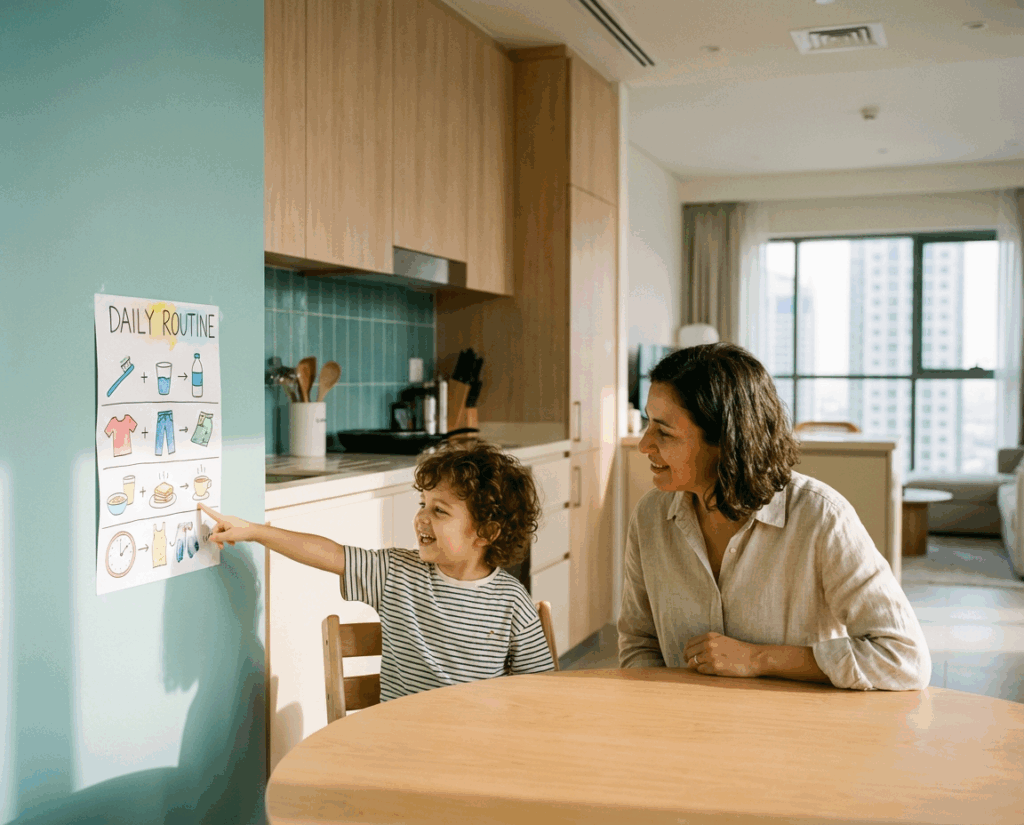
Just as adults rely on to-do lists, children benefit from seeing their schedule laid out. Keep it simple – three to five tasks at a time. For younger children, picture-based schedules work especially well. A visual chart removes the need for repeated verbal reminders, which can create friction.
Building a new habit takes time. Give gentle reminders and praise the effort – not just the result. A child who hears “I noticed you got your bag ready without being asked” is more motivated than one who only hears what they got wrong. Consistency and patience matter more than perfection.
Some children face deeper challenges with transitions, structure, and executive functioning that go beyond typical resistance. If your child’s difficulty with routines is persistent, intense, or significantly affecting their wellbeing at home or at school, it may be worth speaking to a specialist. At Talking Brains Center in Dubai, our psychomotor therapists and psychologists work with children to build the everyday skills that support independence, confidence, and a smoother family life.
Our specialists in Dubai are here to help. Book a consultation with our team to find out how we can support your child’s development.
Book a Consultation Our Services